
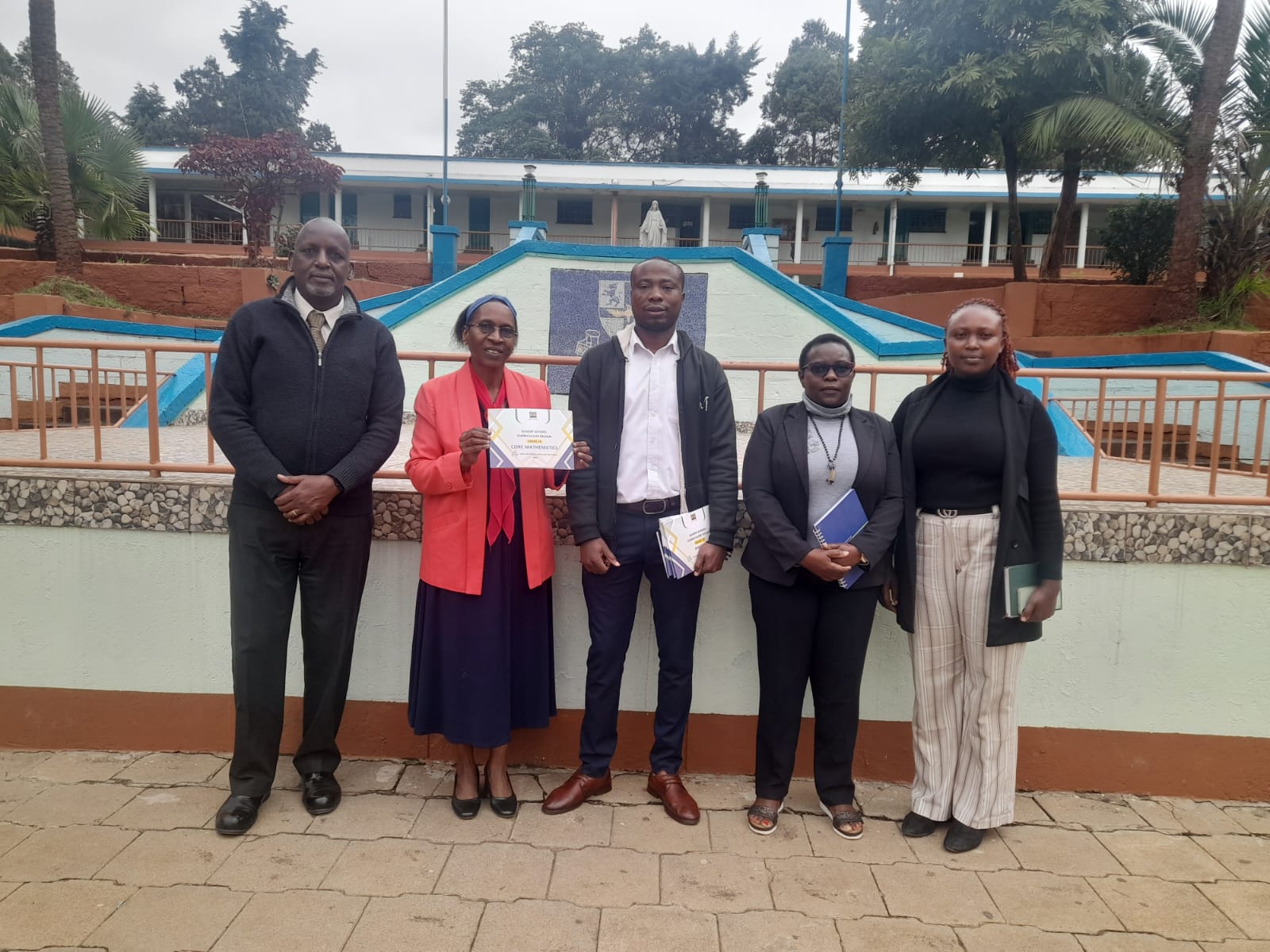
On 3 June 2026, the Faculty of Engineering, University of Nairobi, held a stakeholder engagement meeting with Grade 10 Science Teachers from St. Mary’s School, Nairobi to discuss the implementation of the Competency-Based Education and Training (CBET) Curriculum and its implications for engineering education.
The meeting was led by the Dean of the Faculty of Engineering, Prof. Siphila Mumenya, and provided a valuable platform for exchanging perspectives on the emerging STEM pathway under the Competency-Based Curriculum (CBC).
Understanding the STEM Pathway
The interactive session enabled participants to gain first-hand insights into the delivery and outcomes of the Grade 10 STEM curriculum. Several key observations emerged from the discussions.
Student-Centred Learning Approach
Teachers highlighted that the delivery of core STEM subjects under the CBET framework is highly student-centred, with learners taking a more active role in the learning process. This represents a significant departure from traditional teacher-centred instructional approaches, where knowledge transfer was largely driven by classroom lectures.
The emphasis on inquiry, problem-solving, experimentation, and collaboration is intended to enhance critical thinking and practical application of knowledge.
Changing Learner Characteristics
Participants noted clear differences between learners who progressed through the 8-4-4 system and those currently undertaking the Competency-Based Curriculum.
While students from the 8-4-4 system were generally more examination and grade-oriented, CBET learners were observed to be:
- More inquisitive and curious;
- More confident in expressing their views;
- More willing to challenge assumptions and ask questions; and
- More engaged in experiential learning activities.
These characteristics are expected to influence future teaching approaches at universities and other institutions of higher learning.
Importance of Industry Collaboration
The meeting underscored the need for strong partnerships between educational institutions and industry.
Participants observed that some schools face limitations in specialised infrastructure and equipment required for effective STEM instruction. As a result, collaborations with industry and higher education institutions will be critical in providing learners with practical exposure, mentorship opportunities, and access to modern technologies and facilities.
Such partnerships are expected to play an increasingly important role in preparing students for engineering and technology careers.
Need for Retooling University Staff
A key takeaway from the discussions was the extensive retooling that secondary school teachers and support staff have already undergone to align with CBET expectations.
Participants emphasised that universities must similarly prepare for the transition by investing in capacity building for:
- Academic staff;
- Technical staff;
- Laboratory personnel; and
- Student support teams.
Retooling will ensure that teaching methodologies, assessment approaches, laboratory instruction, and student support services remain aligned with the competencies and learning experiences of incoming students.
Looking Ahead
The Faculty of Engineering remains committed to engaging stakeholders across the education sector to ensure a smooth transition from secondary education to university-level engineering programmes.
The meeting provided valuable insights into the evolving educational landscape and highlighted opportunities for collaboration between schools, universities, industry, and policymakers in strengthening STEM education in Kenya.
The Faculty extends its appreciation to the administration and science teachers of St. Mary’s School, Nairobi for their participation and looks forward to continued engagement as the country advances the implementation of the Competency-Based Education and Training curriculum.
- Log in to post comments


